

























Québec Election Puts Loto-Québec’s Online Monopoly Under Pressure
Both major opposition parties back private online gambling, but only the Liberals have detailed the rules, costs and safeguards.
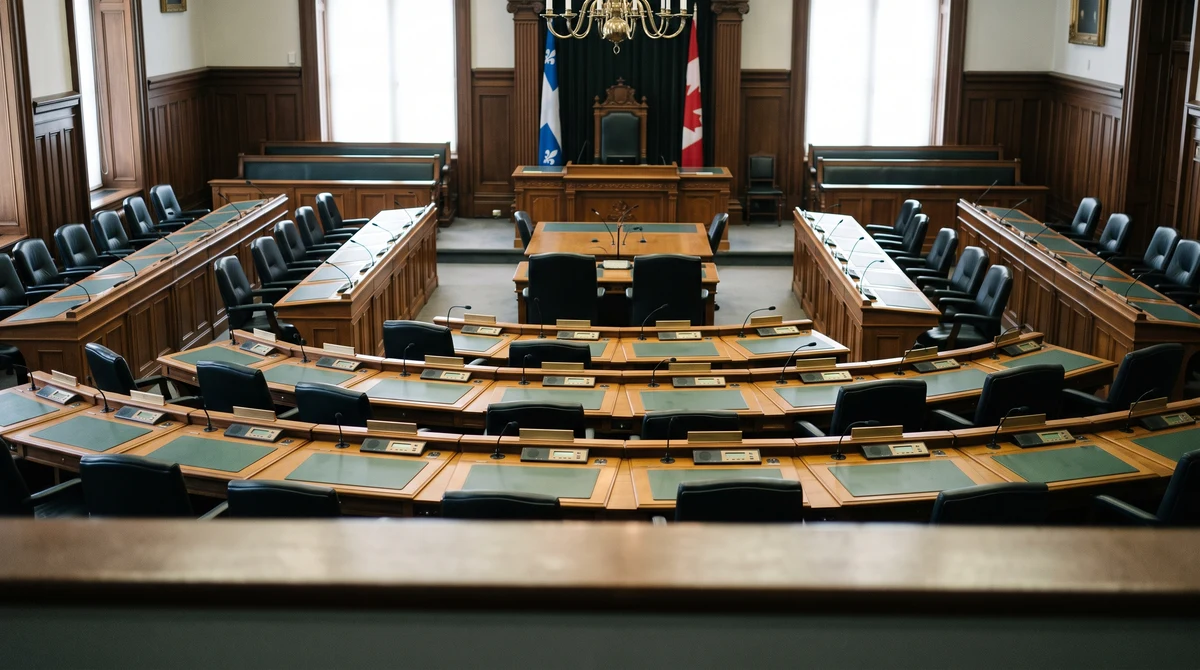
Québec’s two leading opposition parties support opening the province’s online gambling market to private operators, putting Loto-Québec’s government-run model at the centre of the campaign before the October 5, 2026 election.
The Quebec Liberal Party and Parti Québécois have backed a regulated private market. Québec currently relies on Loto-Québec for legal online casino games and sports betting.
The parties agree on the direction. They differ sharply on the details available to voters.
The Liberals have published a regulator and revenue framework. The Parti Québécois supports competition but has not released a costed plan or defined its proposed safeguards.
What the Liberal proposal would change
Quebec Liberal Party leader Charles Milliard proposed expanding the mandate of the Régie des alcools, des courses et des jeux, known as the Régie, to license and supervise all online gambling platforms operating in Québec.
The oversight would include Loto-Québec. Private operators would need provincial accreditation and would face rules on advertising, gambling-harm prevention and protection of minors.
The Liberal plan also calls for an independent organization funded by the industry to provide prevention and support services for people affected by gambling problems.
The party’s fiscal framework estimates that the system could generate C$310 million to C$320 million a year from fiscal 2027-28. The Liberals say part of that money would support gambling-harm prevention.
The proposal was announced on September 9. The party published its fiscal framework on September 13.
The Parti Québécois supports competition but lacks a framework
Parti Québécois leader Paul St-Pierre Plamondon has also backed a regulated market. The party has pointed to Ontario’s competitive system and argued that unregulated online betting already reaches Québec residents.
However, the PQ has not published a costed plan. It has not identified the regulator it would use or explained how licensing, revenue sharing and player safeguards would work.
That gap is significant. Allowing private operators would require Québec to set rules for:
- licensing standards and revenue sharing;
- advertising restrictions;
- identity and age verification;
- geolocation controls;
- anti-money-laundering obligations; and
- dispute-resolution procedures.
Why Loto-Québec is at the centre
Loto-Québec is both the province’s state gaming operator and a major source of public revenue. Its online platform offers casino games and sports betting under the current Québec model.
For the 90-day period ending June 29, 2026, Loto-Québec reported total revenue of C$782.6 million and consolidated net income of C$398.1 million across its activities. Those figures cover the corporation as a whole, not online gambling alone.
The corporation’s current position is that lotoquebec.com is Québec’s only fully legal casino and sports-betting website. A competitive market would change that structure and require Loto-Québec to operate alongside licensed private companies.
Ontario and Alberta offer different models
Ontario launched its regulated competitive online gambling market on April 4, 2022. In fiscal 2024-25, 50 operators generated C$2.9 billion in total gaming revenue from C$82.7 billion in wagers, according to iGaming Ontario.
Those are gaming-market figures, not government tax receipts. iGaming Ontario reported net gaming revenue of C$574.1 million after operator payments.
Alberta launched its regulated private iGaming market on July 13, 2026. The Alberta iGaming Corporation conducts and manages the market, while Alberta Gaming, Liquor and Cannabis acts as regulator.
Québec could study both provinces, but neither model would automatically apply. The province would need to establish its own legal and administrative framework.
The decision comes after the vote
The October 5 election will not immediately open Québec to private gambling operators. It will determine whether a government has the political mandate to draft legislation and build a licensing system.
The main unresolved questions are who would regulate the market, how Loto-Québec would be treated, how much revenue would reach the province and whether player-protection measures would apply equally to public and private operators.
For Québec residents, the practical change would be a wider choice of legal platforms. The regulatory test would be whether that choice comes with enforceable controls on advertising, age verification, self-exclusion, payment security and gambling-related harm.