

























Alberta and B.C. Clash Over Who Controls Canada’s Online Gambling Market
Alberta backs regulated private operators, while B.C. defends its Crown-led model, creating a major dispute over revenue and player protection.
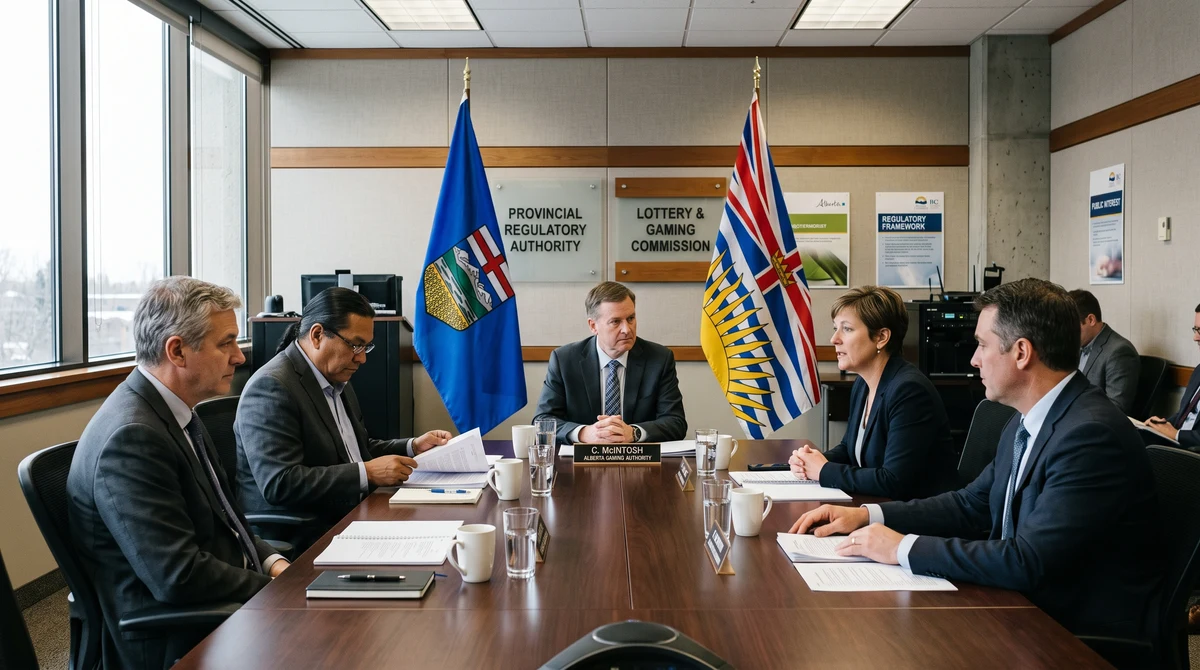
Alberta is opening online gambling to regulated private operators. British Columbia keeps the market under a Crown-led system. The dispute centers on ownership, public revenue and player protection.
Alberta and British Columbia are divided over who should control online gambling after Alberta Minister Dale Nally rejected criticism from British Columbia Lottery Corporation chair Greg Moore on August 30, 2026.
The dispute places Alberta’s new competitive market against B.C.’s Crown-led system. It also raises a broader question about where online gambling revenue should go: to public corporations or private operators under provincial oversight.
Two different models
Alberta launched its regulated online gambling market on July 13, 2026. The Alberta iGaming Corporation oversees commercial operations. Alberta Gaming, Liquor and Cannabis regulates operators and suppliers.
Operators must register with Alberta Gaming, Liquor and Cannabis and sign a commercial agreement with the Alberta iGaming Corporation before operating legally in the province. The regulator also requires integration with Alberta’s centralized self-exclusion program.
British Columbia uses a different structure. Under the province’s Gaming Control Act, the British Columbia Lottery Corporation conducts and manages commercial gaming.
The British Columbia Lottery Corporation identifies PlayNow as the province’s only legal online gambling platform. Its net income returns to the provincial government.
B.C.’s framework includes self-exclusion, time and loss limits, and monitoring for signs of problem gambling.
What Moore criticized
Moore criticized Alberta’s reliance on private operators, according to Canada Gaming Review. He warned that foreign-owned companies could capture a large share of gambling revenue and send profits, data and economic value outside Canada.
His criticism focused on ownership as well as market structure. Alberta allows multiple registered brands to compete. B.C. keeps online gambling within a Crown-led model.
Moore’s comments were a warning about the possible outcome of Alberta’s policy. They were not evidence that foreign operators have already captured a specific share of Alberta’s revenue. No public ownership or revenue breakdown was cited in the dispute.
Nally’s response
Nally called Moore’s criticism disingenuous. He defended Alberta’s system as a way to move players away from offshore and unregulated websites.
Alberta estimates that unregulated operators previously captured about 70 per cent of the province’s online gambling activity. The government says regulation will improve age checks, identity controls, responsible-gambling measures and financial oversight.
Under Alberta’s published model, operators receive 80 per cent of net iGaming revenue. The provincial government retains 20 per cent.
Before that split, three per cent of gross gaming revenue is allocated to First Nations and social-responsibility funding.
The public-return battle
The disagreement also concerns how gambling profits are distributed.
- Alberta’s private operators receive the larger share of net revenue under the published model.
- In B.C., the British Columbia Lottery Corporation says PlayNow’s net income returns to the province.
- Both provinces say their systems can support player protection and reduce illegal or offshore activity.
The British Columbia Lottery Corporation’s 2026-27 service plan says PlayNow is the province’s only legal online gambling option and the only platform whose net income returns to the province.
The plan also says advertising for private sites licensed in Ontario can direct B.C. residents toward offshore or unregulated alternatives.
What changes for players
A platform approved in Alberta is not automatically legal in British Columbia. Players must use platforms authorized under the rules of the province where they are located.
Alberta’s regulated system requires operators to follow provincial rules on self-exclusion, player limits, transaction records, anti-money-laundering controls and intervention in cases of high-risk behaviour.
B.C. applies its own Crown-led controls through the British Columbia Lottery Corporation and the provincial gaming regulator.
The two governments have not agreed on which model offers the stronger balance between competition, public revenue and player safety. Alberta’s market will provide a direct test of the competing approaches.
If private operators attract players away from offshore sites, Nally’s argument will gain support. If public returns fall or safeguards prove uneven, Moore’s concerns will carry greater weight.
A wider Canadian divide
The conflict reflects Canada’s province-by-province approach to online gambling.
- Ontario licenses private operators through its own regulatory system.
- Saskatchewan uses a Crown and Indigenous gaming structure.
- British Columbia maintains a public monopoly.
- Alberta has chosen regulated competition.
Canada has no single national online gambling licence or unified provincial market.
The Alberta dispute shows that the policy debate extends beyond legality. It also concerns ownership, public accountability, consumer protection and who receives the money generated by online play.