





























B.C. Illegal Gaming Case Raises Questions About Player Protection
Two people face charges after a three-year investigation into alleged illegal gaming houses that led to major cash, equipment and tobacco seizures.
Two people face charges in British Columbia after a three-year investigation into alleged illegal gaming houses in the Lower Mainland. Police say the investigation began in March 2023 and later expanded to several locations.
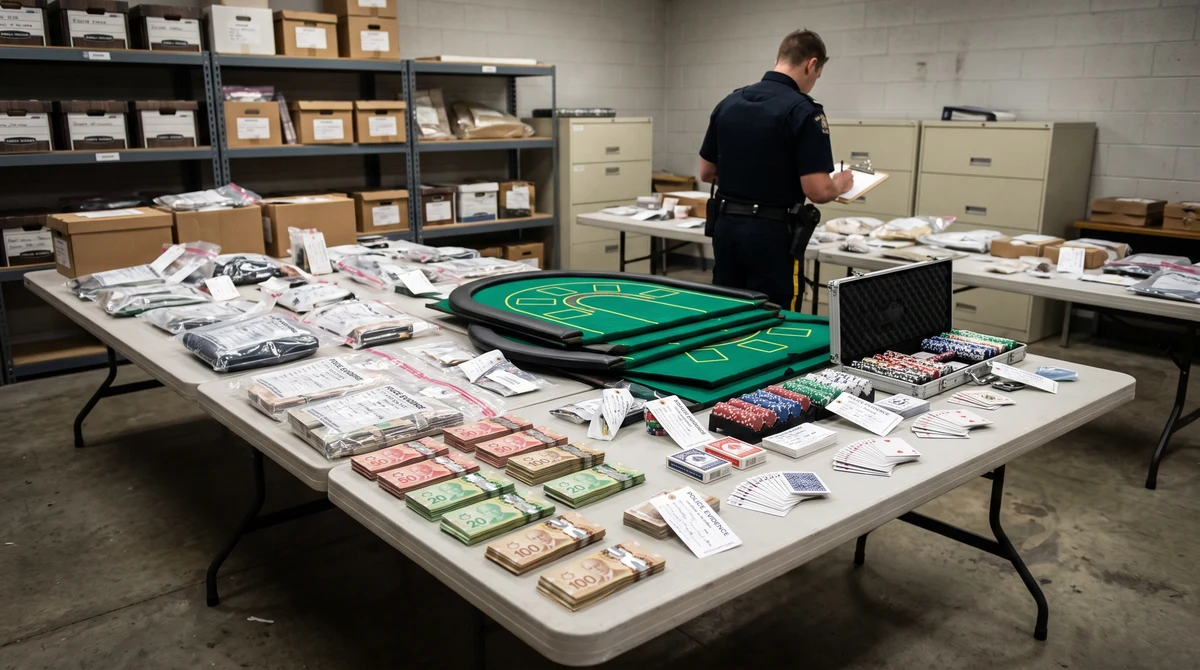
The Combined Forces Special Enforcement Unit of British Columbia said investigators seized gaming tables, other equipment, electronic devices, approximately 145 kilograms of illegal tobacco and about C$240,000 in cash.
The seizures were announced on September 3, 2026. CityNews Vancouver reported the arrests and the charges.
Charges follow investigation that began in 2023
Shahrouz Younesi, a 54-year-old Burnaby resident, was charged on August 26 with keeping a common gaming house and selling unstamped tobacco products, according to police.
Xiaoyi "Karen" Zhang, 46, of Vancouver, was charged the same day with keeping a common gaming house.
Both accused are scheduled to appear in court. The allegations have not been proven.
The seized cash and equipment indicate the scale of the alleged operation, but the charges do not establish how the money was generated or whether other offences occurred.
Why illegal gaming creates a protection gap
Licensed gaming in British Columbia operates under a provincial system with separate roles for the British Columbia Lottery Corporation, the Gaming Policy and Enforcement Branch and law-enforcement agencies.
The British Columbia Lottery Corporation conducts and manages provincial gaming. The Gaming Policy and Enforcement Branch oversees the integrity of the sector, according to the province's legal framework.
Legal online gaming and gaming facilities must follow rules covering areas such as:
- Age restrictions and account controls.
- Player limits, short-term breaks and self-assessment tools.
- Information about problem gambling and support services.
- Anti-money-laundering procedures and suspicious-activity monitoring.
British Columbia's current Problem Gambling Regulation took effect on April 13, 2026. It requires online gaming schemes to provide tools and information intended to identify and reduce gambling harm.
Those rules do not apply in the same way to an alleged illegal gaming house. Players at such locations may have no verified age check, formal self-exclusion process, regulated dispute channel or clear protection for funds held by an unlicensed operator.
This is a regulatory distinction, not a finding that every person who attended the alleged locations suffered harm.
Enforcement remains central to provincial policy
The province says gambling enforcement targets illegal activity, money laundering, fraud, theft and the participation of minors. Authorities also work with police, the British Columbia Lottery Corporation and gaming-service providers to strengthen controls in the legal sector.
The latest case follows another British Columbia investigation reported by CityNews Vancouver in May 2026. Police arrested 11 people and seized cash, vehicles and gaming equipment in searches linked to alleged illegal home gaming in Maple Ridge, Coquitlam and Surrey.
Charges were anticipated in that investigation at the time.
Together, the cases show the difference between legal and underground gaming. Licensed operators must follow identity-check, safer-gambling and financial-oversight requirements. Players at alleged illegal sites may have fewer safeguards before police intervene.
What happens next
The court process will determine whether the allegations against Younesi and Zhang are proven. Police have not announced a conviction or final forfeiture connected to the latest seizures.
For British Columbia regulators, the case raises questions about how quickly illegal gaming sites can be identified before players encounter unregulated financial transactions, unsafe premises or other criminal activity.
Responsibility for enforcement rests with the province and law-enforcement agencies. The case also highlights the need for cooperation among police, regulators, the British Columbia Lottery Corporation and the public.