


























Alberta’s iGaming Surge Tests Geolocation and Player-Protection Systems
Verification activity rose by up to 60% on individual days, testing Alberta operators before the province’s busiest sports periods.
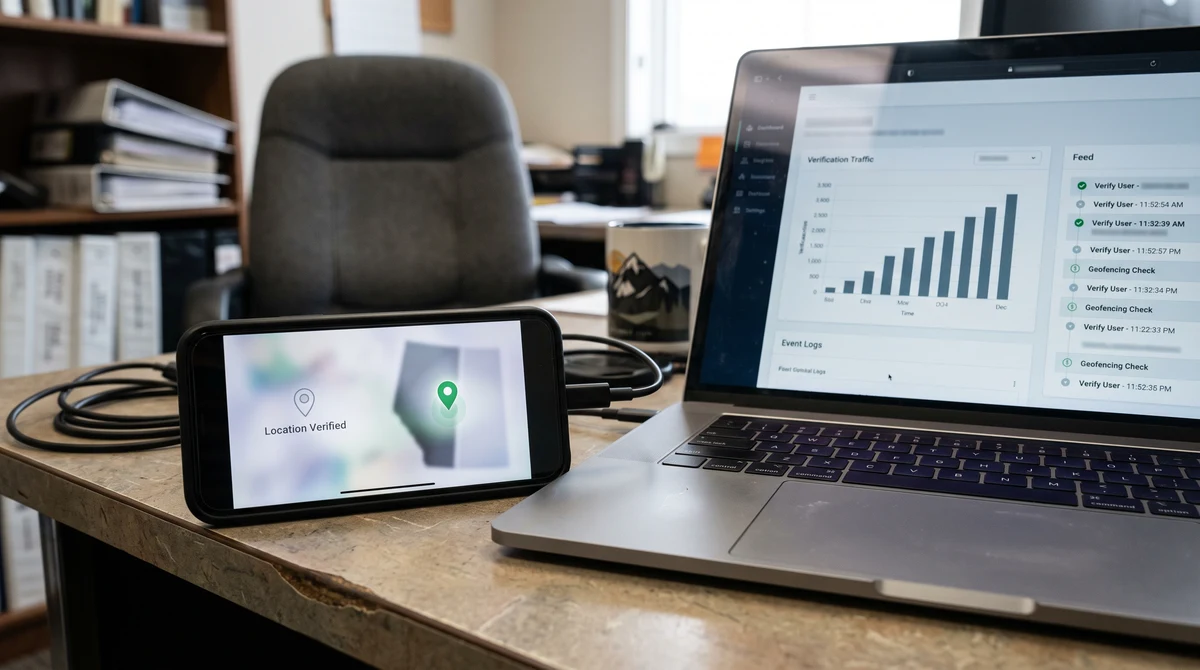
Alberta’s regulated iGaming market is testing the capacity of geolocation and player-verification systems after activity rose by up to 60% on individual days during its first 60 days. The figures provide an early indication of how compliance controls may perform during major sporting events, long weekends and other demand spikes.
The data came from GeoLocs, a geolocation service developed by mkodo. Canadian Gaming Business reported additional increases of 30% and 21% around long weekends, Alberta Day celebrations and periods of heightened sporting activity.
The figures come from a supplier with a commercial interest in the market. They are not the result of an independent government audit.
The early data shows that player-protection systems must remain accurate and available when demand rises sharply.
Web checks led early usage
Web sessions accounted for 47% of verification requests in Alberta during the period covered. iOS accounted for 28%, while Android represented 25%.
The split matters because browser-based sessions can create different location and permission problems from native mobile applications. Operators must manage location prompts, browser settings, device signals and failed checks without weakening controls for real-money play.
The figures do not show how many checks failed, how long verification took or how many players abandoned a session. They also do not prove that a specific event caused any individual increase.
They do show that verification demand can move sharply in a new regulated market.
What Alberta requires
Alberta’s regulated market launched on July 13, 2026. The province requires operators to build player protection into their operations, including procedures to identify and respond to high-risk behaviour.
- Financial and time-based play limits must be available during registration and after an account is opened.
- Operators must provide information that helps players make informed decisions about their activity.
- Registered platforms must integrate Alberta’s centralized self-exclusion system.
- Operators must record player transactions and give players access to their account activity.
- Players must affirm that they are fit to play before taking part in iGaming activities.
These requirements operate alongside identity and location controls. Players must be verified as eligible to use the service and physically located in Alberta before participating in regulated online gambling.
Separate regulatory and commercial roles
The Alberta Gaming, Liquor and Cannabis Commission regulates registered operators and suppliers. Its responsibilities include player protection, responsible gambling standards and the required centralized self-exclusion system.
The Alberta iGaming Corporation manages the commercial side of the market. Operators must complete registration and due diligence with the Alberta Gaming, Liquor and Cannabis Commission before entering a commercial agreement with the corporation.
The two bodies have separate roles: one is regulatory, while the other manages commercial relationships.
The next operational test
Alberta entered its first regulated National Football League season and is moving toward its first full National Hockey League season under the new framework. Those periods could produce heavier login and verification volumes than the early market average, especially when major events overlap.
The practical test will not be the number of verification requests alone. Operators will also need to keep checks accurate and available while responding to suspicious location signals, protecting self-excluded players and identifying signs of risky behaviour.
Sixty days is too short to establish a long-term market pattern. But the early figures raise a clear operational question: can Alberta’s player-protection rules work at peak demand, not only during ordinary traffic?