






























Supreme Court to Test Ontario’s International Online Gaming Model
The Supreme Court will decide whether Ontario can link local players with participants outside Canada in regulated online gaming and sports betting.
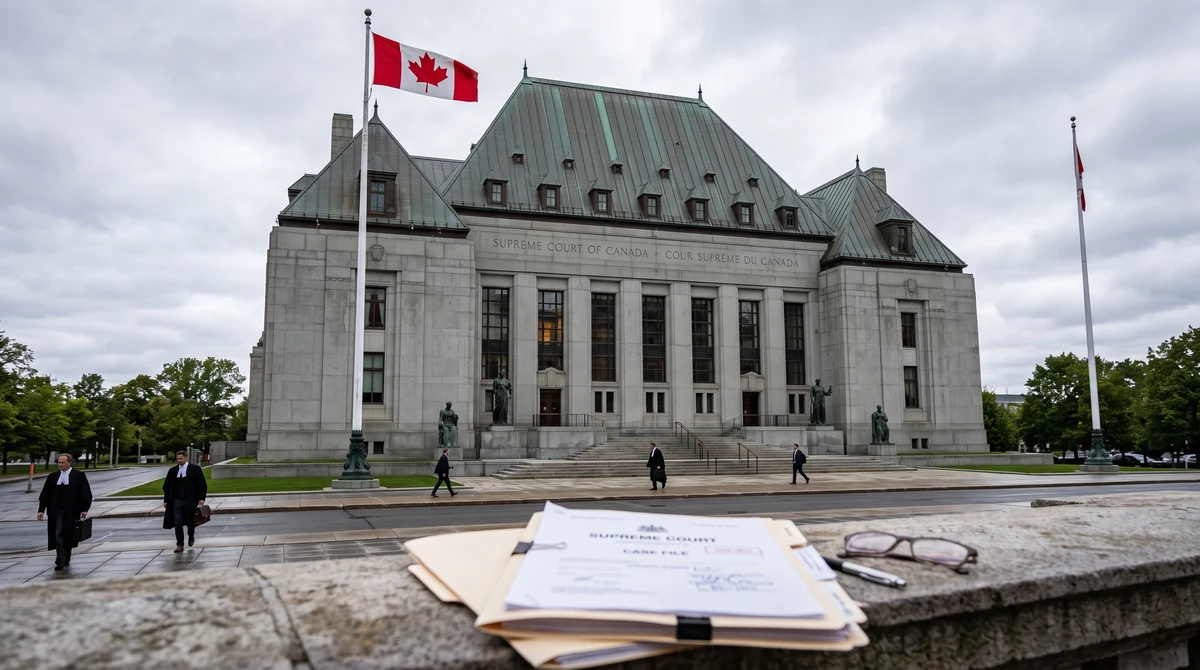
The Supreme Court of Canada will hear Ontario’s international-liquidity appeal on October 7, 2026. The case could define how far provincial online gaming systems may extend beyond Canada’s borders.
The hearing is scheduled in file 42141, Atlantic Lottery Corporation, et al. v. Attorney General of Ontario. The court docket recorded new correspondence on August 25, 2026. The hearing date was set on July 13, 2026. Supreme Court of Canada case record
What the court will decide
The appeal centres on section 207(1)(a) of the Criminal Code. The provision allows a provincial government to conduct and manage a lottery scheme “in that province” under provincial law.
The Supreme Court must decide whether that wording permits Ontario to let local players take part in regulated online games and betting pools with participants outside Canada.
The proposed model could cover peer-to-peer products such as online poker, daily fantasy sports and some forms of sports betting. Supreme Court of Canada case record
Ontario prevailed at the Court of Appeal
The Ontario Court of Appeal answered the main reference question in the affirmative on November 12, 2025. A majority held that online gaming and sports betting could remain lawful under the Criminal Code even when Ontario users participate in games involving people outside Canada.
Justice van Rensburg dissented. She found that Ontario’s proposed model would not qualify for the provincial exemption. She said the international-liquidity element would contravene the gaming prohibitions in the Criminal Code. Supreme Court of Canada case record
Who brought the appeal
The appeal was brought by four provincial lottery and gaming entities:
- Atlantic Lottery Corporation
- British Columbia Lottery Corporation
- Manitoba Liquor and Lotteries Corporation
- Loto-Québec
The respondent is the Attorney General of Ontario. The Canadian Gaming Association, Flutter Entertainment, NSUS Group and NSUS Limited, and the Attorney General of Alberta have intervener status.
Supreme Court of Canada case record
Why international liquidity matters
International liquidity means combining eligible players from different jurisdictions in the same online games or betting pools. Larger pools can provide more opponents and change the size and structure of peer-to-peer games.
Ontario’s proposed system would not open its regulated sites to players elsewhere in Canada. Ontario’s filed position says the province would continue to regulate its own players and connect with approved international schemes through agreements and technical controls, including geofencing. Ontario Court of Appeal filed materials
This distinction limits the immediate scope of the case. It is not a ruling on a national licence, and it would not automatically authorize international play in other provinces or territories. Any effect outside Ontario would depend on the law and operating arrangements in each jurisdiction.
What could change after the ruling
If the Supreme Court upholds the Court of Appeal, iGaming Ontario could develop a framework for pooled international liquidity in peer-to-peer products. Ontario would still need to set operating conditions and maintain oversight through its existing conduct-and-manage and regulatory structure.
iGaming Ontario’s 2026-2029 business plan says an affirming decision would allow it to work with operators and provincial partners on a path toward international play. The plan treats interprovincial liquidity as a separate issue. A ruling on international participation would therefore not resolve every question about cross-border pooling within Canada. iGaming Ontario business plan
The Supreme Court has not ruled on the merits. The October 7 hearing is the next major step in a dispute over the territorial limits of provincial online gaming under Canada’s federal criminal law.